
How to approach industrial digital transformation without oversizing the investment
Industrial digital transformation does not have to begin with a large technology programme. For many manufacturers, the right starting point is more practical: identify where operations lose time, visibility, quality or energy, and decide which digital step can address that problem without creating unnecessary complexity.
The pressure to invest in smart manufacturing, industry 4.0 platforms and industrial automation is real. Yet the companies that move with more discipline often avoid a common trap: treating digitalization as a race to deploy tools instead of a structured way to improve operations.
A realistic approach connects investment to operational priorities, validates impact in controlled phases and scales only when the organization is ready to use the solution consistently. This is especially relevant in industrial environments, where every technology decision must respond to real operational constraints.
Start with the operational problem, not the technology
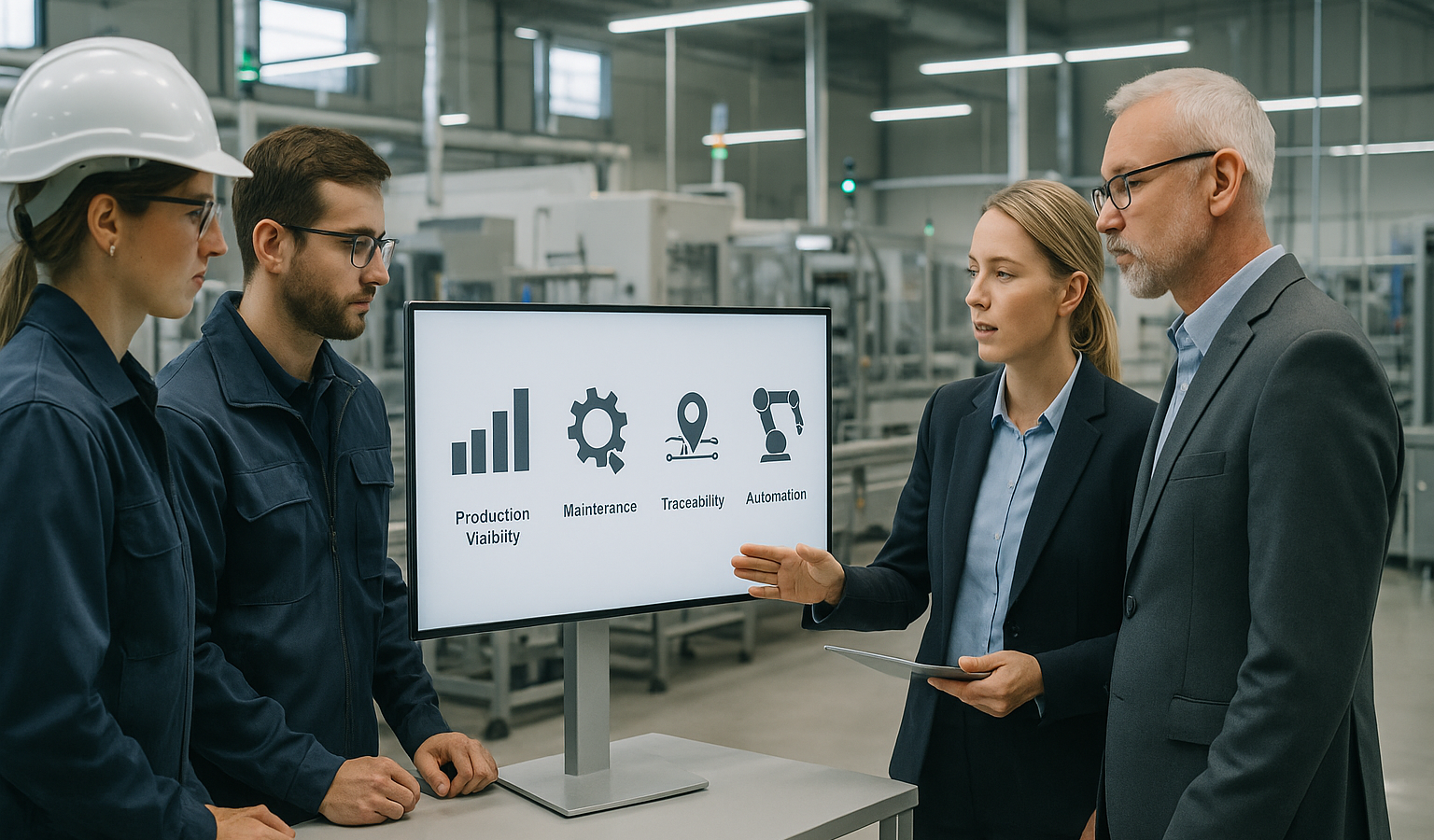
In an industrial environment, digitalization can mean better production visibility, more reliable maintenance planning, stronger traceability, selective automation or improved energy control. These are different needs, and they should not all compete for investment at the same time.
One factory may need to understand why a line stops several times per shift. Another may need a clearer link between batches, materials and quality checks. A third may have enough automation already, but poor visibility of energy consumption by area or equipment.
The first decision is therefore strategic: where can digitalization remove friction, reduce uncertainty or support better decisions? Once that is clear, technology choices become easier and investment becomes more proportionate.
Assess digital readiness before committing budget
Before approving new systems, industrial leaders should understand the current level of process maturity, data availability and organizational readiness. This does not require a long theoretical assessment, but it does require a clear view of reality on the shop floor.
- Which operational issues create the most disruption?
- Which data is already available, and which data is still captured manually?
- Where do production, maintenance, quality and logistics lose continuity?
- Which decisions depend on spreadsheets, informal knowledge or delayed reporting?
- Which teams will need to use and maintain the solution after launch?
This type of assessment helps avoid oversized investments. It also prevents companies from digitalizing weak processes before they have clarified ownership, standards and decision routines.
Practical use cases for measured progress
The most effective first steps are usually narrow enough to be manageable and important enough to matter. They should be visible to the business, measurable in operational terms and realistic for the people who will use them.
Shop floor: production visibility
A focused initiative may start with basic production data: orders, downtime reasons, changeovers, output versus plan and incidents by shift. This gives plant managers a more reliable basis for daily decisions and continuous improvement meetings.
Maintenance: structure before prediction
Advanced predictive maintenance is not always the first step. Many companies gain more by building a clear asset register, recording interventions consistently, identifying critical equipment and linking failures to operating conditions or production schedules.
Traceability: make information usable
Traceability should help the business answer practical questions quickly: what was produced, with which materials, under which conditions, by which shift and with which quality checks. The value is not in storing more information, but in making relevant information available when it matters.
Automation: invest where it removes constraints
Industrial automation is most useful when it reduces repetitive work, improves safety, stabilizes quality or removes a bottleneck. A limited automation project that is well integrated and easy to support may create more value than a broader deployment that the organization struggles to operate.
Energy efficiency: measure before optimizing
Energy efficiency often starts with visibility. Measuring consumption by line, equipment, time period or operating mode can reveal unnecessary starts, abnormal patterns or areas where consumption is not aligned with production activity.
Build a phased roadmap
A balanced digital roadmap should help the company move forward without committing too much capital too early. A simple sequence is often enough:
- Prioritize. Select operational problems with business relevance and realistic adoption potential.
- Validate. Run controlled pilots with clear owners, defined success criteria and limited scope.
- Integrate. Avoid isolated tools by planning how data, systems and teams will connect.
- Scale. Expand what works, stop what does not and turn lessons learned into operating routines.
This staged approach gives leaders more control over risk. It also creates space to learn before making broader platform, integration or automation decisions.
Frequent mistakes in industrial digital transformation
When digital programmes become too expensive or too slow, the root cause is often not the technology itself. It is usually the way the initiative was framed.
- Buying tools before defining the problem. Technology cannot compensate for an unclear operational priority.
- Digitalizing unstable processes. If responsibilities and routines are unclear, software may simply make confusion more visible.
- Leaving the shop floor out of the design. Operators, supervisors and maintenance teams know constraints that are not visible from a meeting room.
- Creating disconnected pilots. A successful pilot loses strategic value if it cannot connect with the wider systems landscape.
- Measuring installation instead of impact. The goal is not to deploy a tool; it is to improve decisions, reliability, quality, cost or service.
- Scaling before adoption is proven. Expansion should follow evidence that the solution is useful, understood and sustainable.
How to keep investment realistic
A proportionate investment has three characteristics: it addresses a relevant operational need, it can be measured through practical indicators and it fits the organization’s ability to adopt and maintain it.
Before increasing scope, leaders should check whether the company has reliable data, clear process ownership, internal champions, integration capacity and a realistic support model. When these elements are missing, a simpler step may be more valuable than a large programme launched too early.
When the focus is availability, traceability, maintenance or energy efficiency, connecting the roadmap with operations and production helps prioritize investments by operational impact rather than by technological appeal.
Conclusion: digitalize with discipline
Industrial digital transformation is not about spending less at any cost. It is about investing where the business can turn digital capability into operational improvement. That requires focus, sequencing and a willingness to validate before scaling.
Manufacturers that avoid oversized investments usually start with the real constraints of the operation, choose manageable use cases and build the internal discipline needed to sustain progress.
Contact us to assess your company’s digital starting point.